In short: to choose natural stone slabs for a luxury project, start with the architecture and the intended application, compare suitable materials such as marble, travertine and limestone, review the actual slabs rather than small samples, confirm the finish and technical suitability, and secure quantities and layouts before fabrication begins.
Selecting natural stone for a luxury project involves far more than choosing a beautiful marble or matching a colour palette. The right stone must complement the architecture, work with the surrounding materials, perform in its intended environment and remain available in the quantities required throughout the project.
For architects, interior designers, developers and private clients, the process can involve evaluating different quarries, comparing individual slabs, selecting finishes, coordinating fabrication and ensuring that the final material reflects the original design intent.
At Tenetti, we approach natural stone selection as a considered process rather than a simple product purchase. Drawing on 25 years of sourcing experience and established relationships within the natural stone industry, we help clients identify materials that suit the character, technical requirements and ambitions of their projects.
Our experience spans the demands of prestigious residential properties, palaces, hotels and skyscrapers, where material selection, consistency and execution must work together.
This guide explains how to choose natural stone slabs for luxury architecture, what to consider before placing an order, and how an experienced stone partner can help architects and developers make more informed decisions.
1. Start With the Architecture, Not the Stone Name
One of the most common mistakes in natural stone selection is starting with a particular marble name before considering how the material will be used.
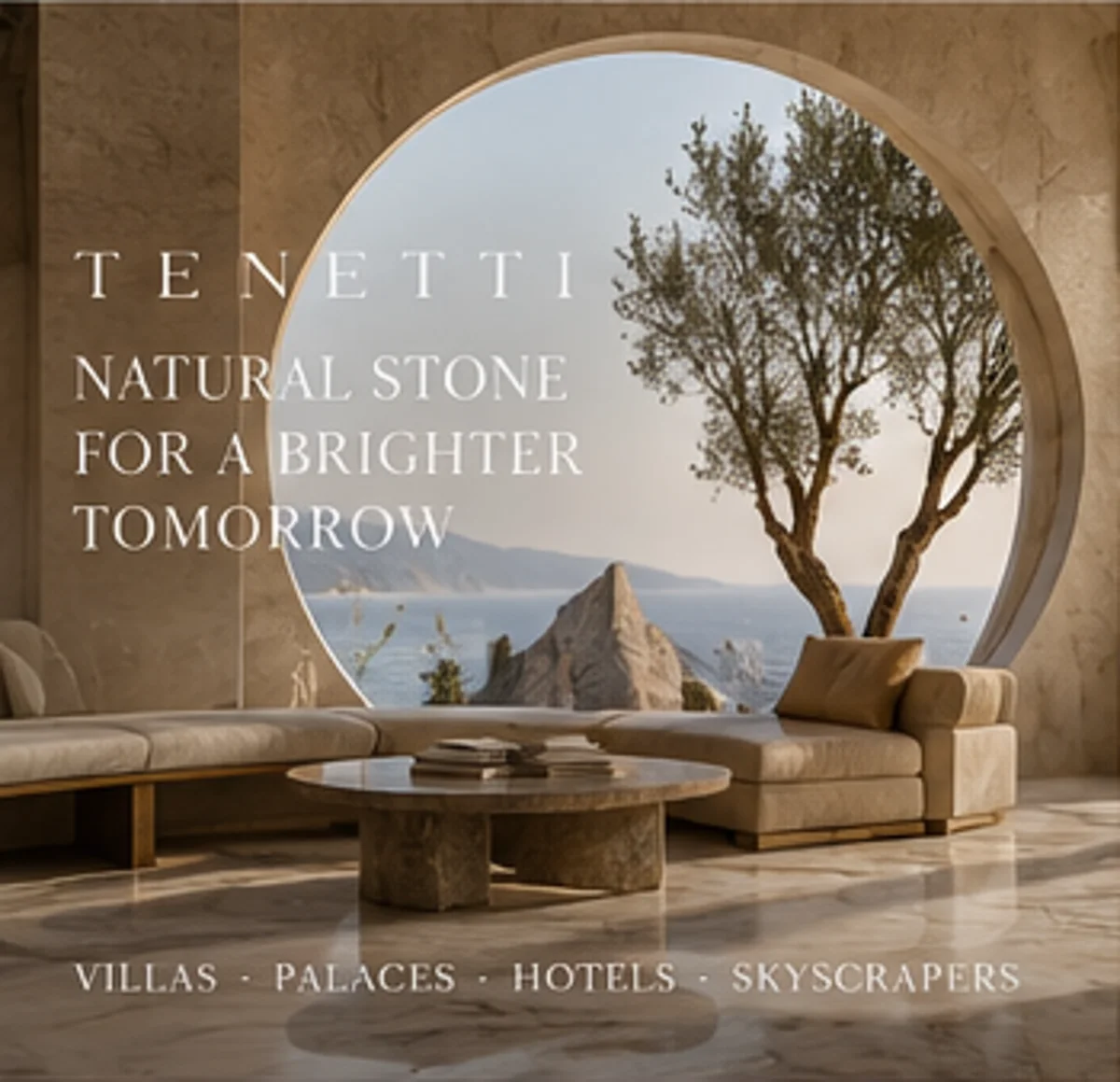
Calacatta, Statuario, Arabescato, travertine and limestone each have distinctive characteristics. However, none is automatically the right choice for every project.
A stone that creates an exceptional feature wall may be less suitable for a busy kitchen floor. A soft, understated limestone may complement a contemporary villa beautifully, while a more expressive marble might be better suited to a dramatic entrance or hotel reception.
Before selecting a material, consider five questions:
- What architectural atmosphere should the stone create?
- Will it be used for flooring, walls, stairs, worktops, façades or outdoor areas?
- How much natural variation is desirable?
- What level of maintenance is acceptable?
- How will the stone interact with natural light, artificial lighting, timber, metal and other finishes?
For example, a contemporary villa with large windows and warm interior finishes may benefit from honed limestone or travertine, creating a calm, continuous architectural language. A more formal residence may call for expressive marble, with carefully selected veining across feature walls and entrance floors.
The best choice is the material that serves the architecture, rather than the material with the most recognisable name.
2. Why Choosing the Actual Slabs Matters
Natural stone is a geological material. Its colour, mineral composition, veining, fossils, movement and texture develop naturally, which means that variation exists not only between different stone types but also between individual slabs from the same material.
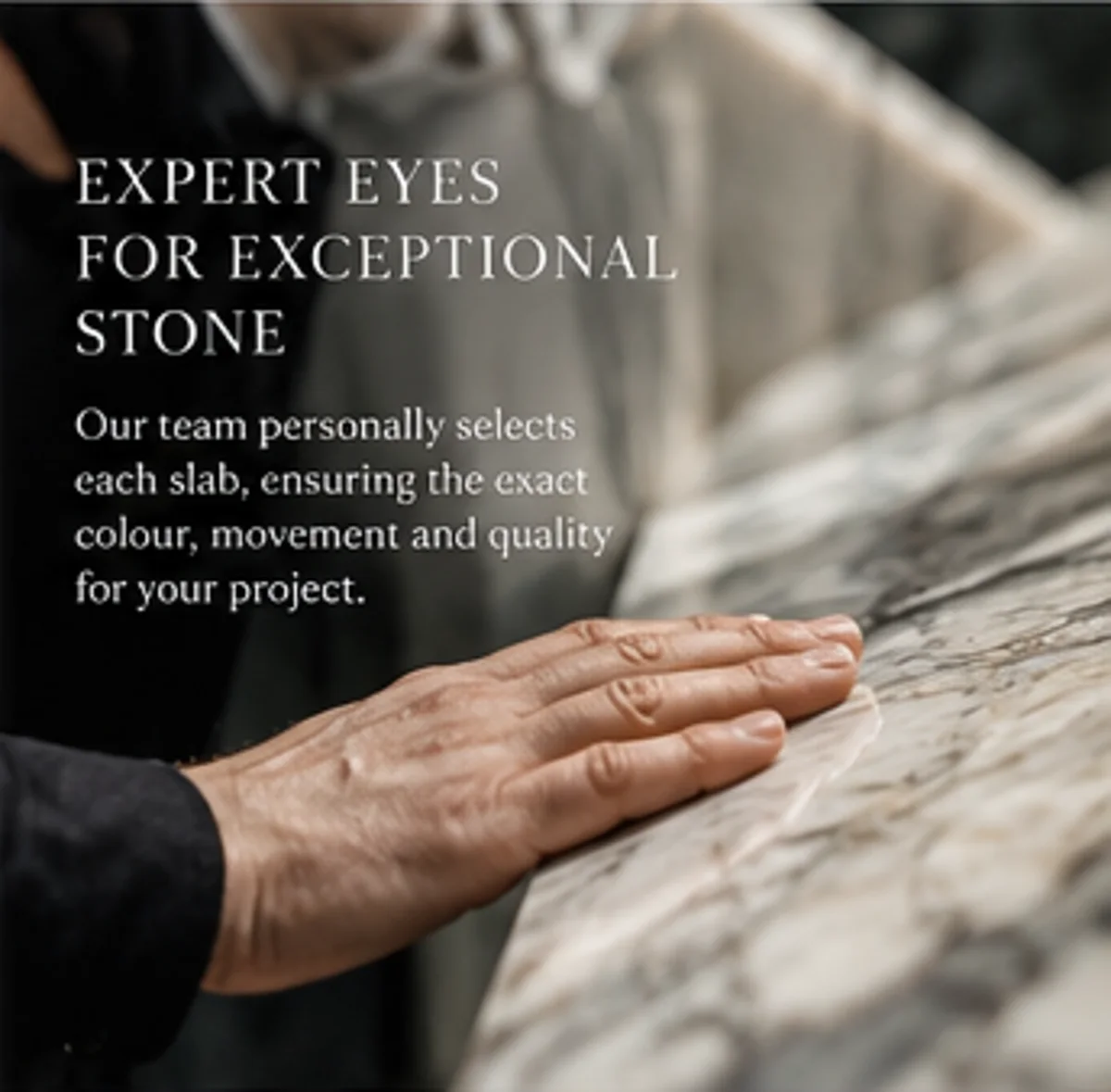
Two slabs sold under the same commercial name can look noticeably different. Even slabs cut from the same block can have different patterns, backgrounds and concentrations of veining.
For this reason, a small sample is useful for understanding a material’s general colour and finish, but it cannot fully represent the final installation.
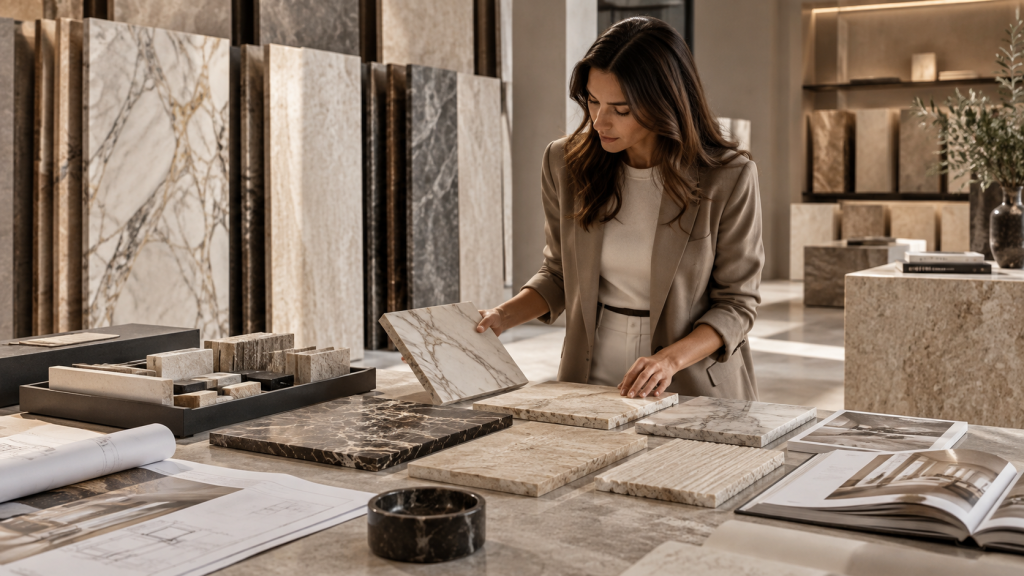
For luxury projects, architects and designers should review the actual slabs whenever possible. Where a physical inspection is impractical, request recent, high-resolution photographs or video of the specific slabs, with clear identification and sufficient detail to assess their appearance.
The selection should consider:
- Background colour and consistency.
- Vein direction, density and contrast.
- Natural features, including fissures, veins and mineral deposits.
- Surface finish and texture.
- Slab dimensions, thickness and usable area.
- The relationship between consecutive slabs.
- The quantity available and the likelihood of securing additional material.
This is particularly important for large floors, full-height walls, reception desks and bookmatched installations. The natural pattern becomes part of the architecture, so the arrangement of the individual slabs deserves as much attention as the material specification itself.
3. How to Choose Between Marble, Travertine and Limestone
The right natural stone depends on the design objective, the application and the expected conditions of use. Marble, travertine and limestone each offer different aesthetic and performance characteristics.
Marble: expressive and architectural
Marble is often selected for its distinctive veining, depth and ability to create a strong visual statement.
White marbles such as Calacatta and Statuario can bring clarity and contrast to interiors, while darker and warmer varieties can introduce richness and a more dramatic character. For a closer look at high-end varieties, see our guide to premium marble for luxury interiors.
Marble works particularly well for feature walls, entrance halls, fireplaces, bathroom walls, bespoke furniture and carefully designed kitchen surfaces.
However, marble is generally susceptible to etching from acidic substances. In kitchens, bars and other frequently used spaces, the choice of finish, maintenance expectations and willingness to accept natural patina should be discussed before specification.
Travertine: warmth and texture
Travertine is valued for its warm colours, natural texture and distinctive porous structure.
Depending on the variety and finish, it can create anything from a clean, contemporary appearance to a more rustic Mediterranean atmosphere. It is particularly effective in villas where the architecture combines natural materials, soft colours and indoor-outdoor living.
Travertine can be supplied with filled or unfilled voids and in finishes including honed, brushed and tumbled. These choices significantly influence the finished appearance and maintenance requirements.
The specific grade, density, finish and intended application should be assessed before using travertine in wet areas or exposed exterior locations.
Limestone: understated and timeless
Limestone offers a quieter visual character, often with subtle fossil patterns, soft tonal variation and a relatively uniform appearance.
It is widely considered for villa façades, flooring, staircases, wall cladding and interiors where the architecture benefits from restraint rather than pronounced veining.
Its suitability depends on the particular limestone’s density, porosity, strength and exposure conditions. Not every limestone performs equally well outdoors, particularly in environments involving moisture, salts or significant temperature variation.
How should architects decide?
Rather than choosing a stone based on appearance alone, compare the available options against the project’s design intent, technical requirements, maintenance expectations, budget and supply constraints.
A knowledgeable supplier can help narrow the selection to a manageable shortlist of materials that meet the brief, instead of presenting a large catalogue without meaningful guidance.
4. How 25 Years of Sourcing Experience Makes a Difference
Natural stone sourcing is about more than finding a quarry or obtaining a quotation.

The same commercial stone name may refer to material with different visual characteristics, depending on the quarry, geological section, block and processing. Availability can also change, and the material that looks suitable in a photograph may not be available in the quantities or dimensions a project requires.
At Tenetti, 25 years of sourcing experience and established industry relationships provide a foundation for a more informed selection process.
That experience matters in several ways.
- Finding the right material. A design brief may call for a particular background colour, vein pattern, texture or level of variation. An experienced sourcing partner can explore different options and help identify materials that meet the brief more closely.
- Understanding natural variation. Knowing that a stone name alone does not guarantee a consistent appearance helps prevent unrealistic expectations and encourages proper slab approval before fabrication.
- Evaluating alternatives. If the preferred material is unavailable, exceeds the budget or is unsuitable for a particular application, alternatives can be assessed according to the design objective rather than price alone.
- Planning availability and quantities. For projects requiring substantial volumes, it is important to establish what is available, how much can be secured and whether future supply can reasonably be expected to match the original selection.
- Coordinating the project. Material selection is only one part of the process. Slab dimensions, finishes, cutting requirements, delivery schedules and installation details all influence the final result.
The value of experience is not that every project requires the most expensive stone. It is that the selection can be made with a clearer understanding of the material, its limitations and its role within the finished building.
5. Selecting Stone for Luxury Villas, Palaces, Hotels and Skyscrapers
Different project types place different demands on natural stone. The material must be selected according to both the visual brief and the practical realities of the building.
Luxury villas
In a luxury villa, stone often connects multiple spaces, from the entrance and living areas to bathrooms, kitchens, staircases, terraces and swimming pool surrounds.
The key is to create a coherent material palette without making every surface identical.
A villa might combine expressive marble in selected interior features, limestone flooring for a quieter architectural background, and textured travertine in appropriate outdoor areas.
The selections should also reflect how the property will be used. A formal reception area has different requirements from a family kitchen or an outdoor dining terrace.
Palaces and prestigious residences
Palatial projects may involve grand entrances, extensive flooring, columns, staircases, decorative walls and highly detailed stonework.

At this scale, consistency of the intended appearance, coordination between slabs and the availability of suitable material become especially important. Highly expressive stone may also require careful layout planning to ensure that the final composition feels intentional.
The selection process should establish the material hierarchy early, identify the key feature areas and coordinate the stone with the architectural drawings.
Hotels and hospitality projects
Hotels require materials that create a distinctive guest experience while addressing operational use, maintenance and replacement considerations.
Lobby floors, reception desks, restaurants, bathrooms and public circulation areas may all require different performance characteristics.
For hotel projects, stone selection should consider expected traffic, cleaning methods, slip resistance where relevant, repairability and the availability of replacement material.
The objective is to balance visual impact with the demands of daily operation.
Skyscrapers and large-scale developments
Large architectural projects introduce additional considerations, particularly when natural stone is specified for façades or extensive cladding systems.
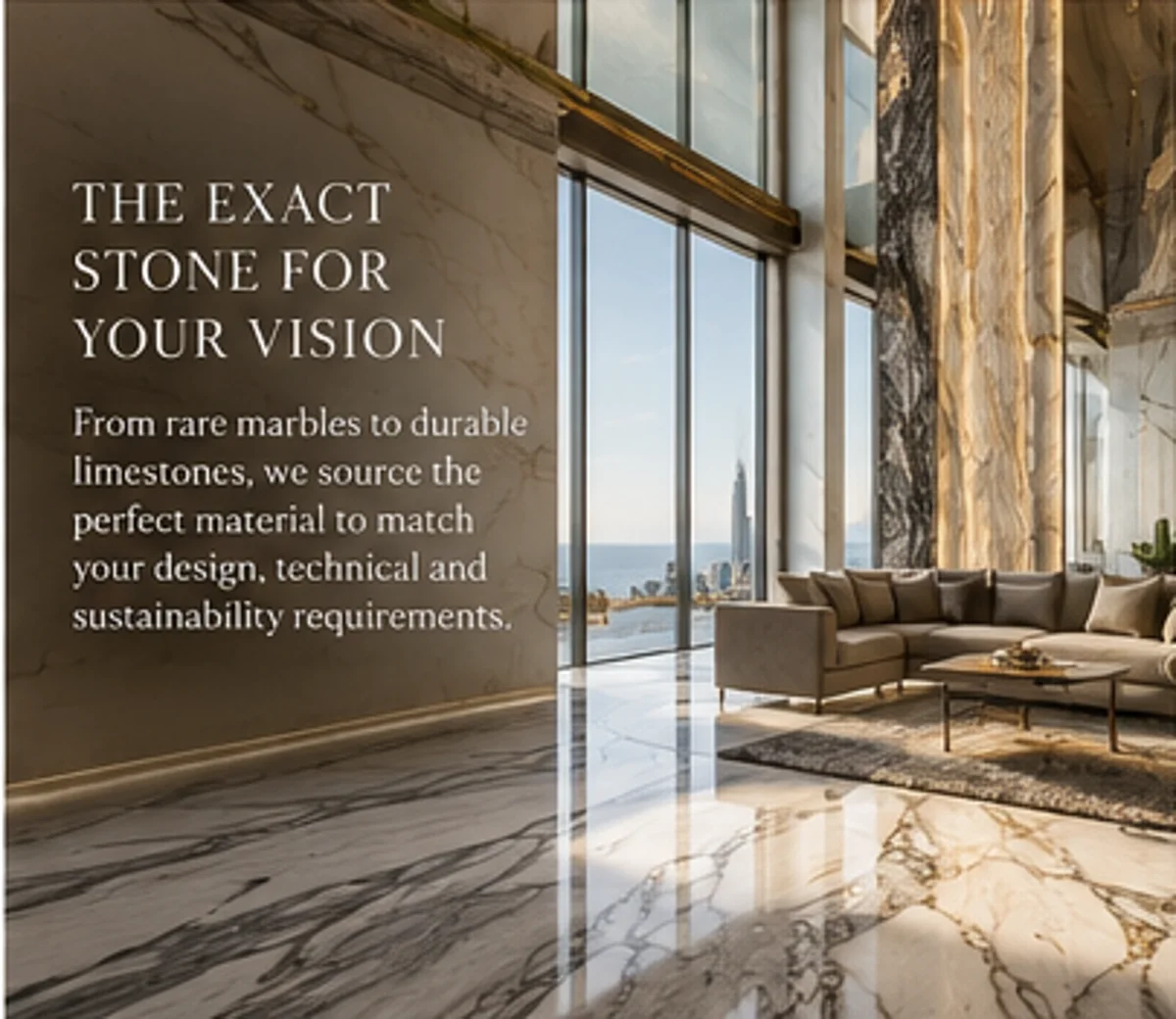
The material must be evaluated against the design, structural system, fixing method, wind loads, exposure conditions and applicable project specifications. The suitability of the stone cannot be determined by appearance alone.
For these projects, architects, façade consultants, structural engineers, specialist fabricators and contractors must coordinate the technical requirements. Learn more about our architectural stone for large-scale developments.
Natural stone selection should therefore take place early enough to inform detailing, procurement, fabrication and installation planning.
Across all these project types, the principle remains the same: the stone should be selected for the building it is intended to serve.
6. How to Select the Right Slab for Bookmatching
Bookmatching is the arrangement of adjacent slabs so their natural veining creates a mirrored pattern across a joint.
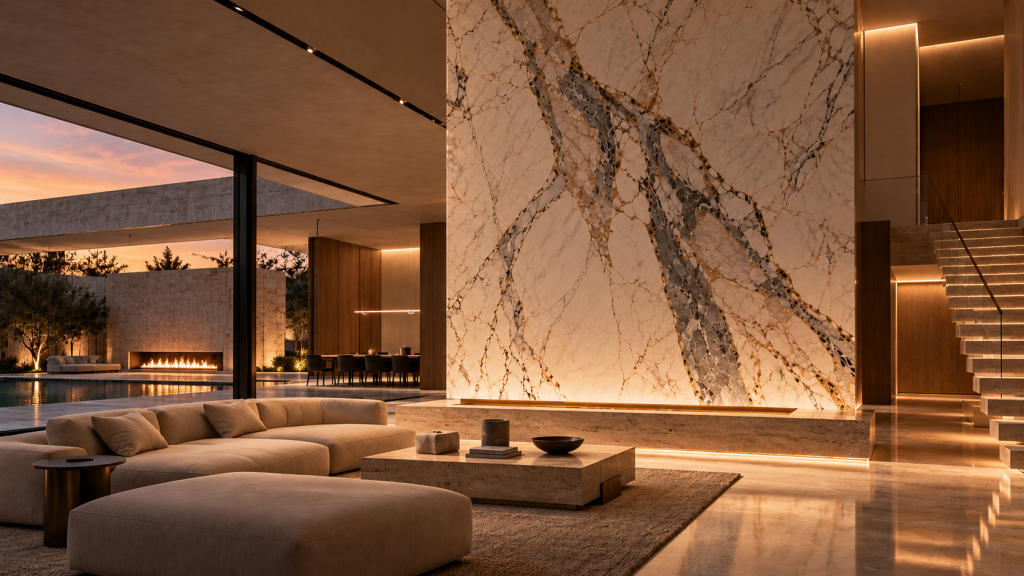
It can transform a natural stone wall into a defining architectural feature, particularly when used for entrance halls, hotel receptions, fireplaces, feature walls and luxury bathrooms.
However, successful bookmatching begins before fabrication.
The slabs must be evaluated together, not simply chosen as separate pieces of the same stone. Their vein direction, background colour, pattern intensity and dimensions need to work as a composition.
Before approving a bookmatched installation, confirm:
- That the slabs are suitable for the intended mirrored layout.
- That the proposed sequence is clearly documented.
- That the slab dimensions allow for the final cutting plan.
- That openings, sockets, joints and other architectural details have been coordinated.
- That the final layout has been approved before cutting begins.
Where the pattern is particularly important, request a layout drawing or digital slab arrangement showing how the stone will appear in its final position.
Bookmatching is not just a decorative technique. It is a way of treating natural stone as part of the architecture itself.
7. Which Stone Finishes Should You Choose?
The finish changes the appearance, texture, light reflection and practical performance of natural stone.
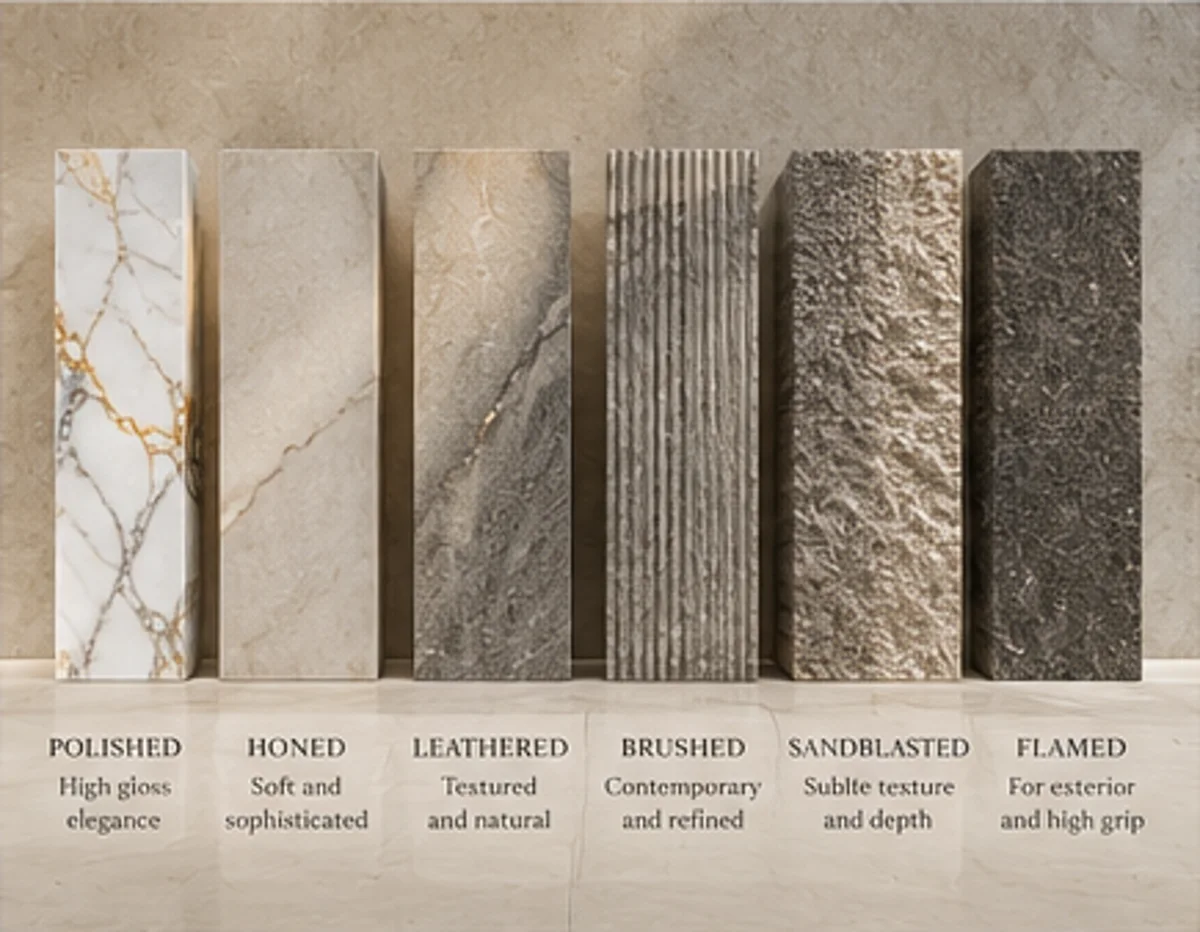
- Polished: Creates a reflective surface that can emphasise colour and veining. It is often used for statement interiors, but can produce glare and may be slippery when wet.
- Honed: Provides a smooth, matte or low-sheen appearance. It suits contemporary interiors and softer architectural palettes, although maintenance and stain behaviour still depend on the specific stone.
- Brushed: Introduces a tactile surface with subtle texture. It can complement travertine, limestone and other materials where a less reflective finish is desired.
- Leathered: Adds a textured finish often used with suitable darker stones. Its appearance and cleaning requirements vary by material.
- Flamed or other mechanically textured finishes: May be appropriate for certain exterior applications where a textured surface is required. The exact finish and stone must be tested and specified for the intended use.
For outdoor flooring and swimming pool surrounds, the decision should include wet slip resistance, barefoot comfort, heat exposure, drainage and maintenance.
There is no single finish that is best for every stone or application. Always assess a representative sample of the actual material in the intended finish.
8. Choosing Natural Stone for Dubai’s Climate
Dubai’s climate makes the selection of exterior and semi-exterior stone particularly important.
High solar exposure, elevated surface temperatures, dust, moisture, irrigation water and coastal conditions can affect the appearance and long-term performance of certain materials.
For exterior façades, terraces, entrance steps and pool surrounds, evaluate the stone’s properties alongside the installation system and the specific environmental exposure. Our guide to luxury exterior cladding for UAE buildings and villas explores these applications in more detail.
Important considerations include:
- Solar exposure: Lighter stones generally absorb less solar energy than darker stones under comparable conditions, although actual surface temperatures depend on several factors.
- Water absorption: Porosity and moisture movement influence suitability for exposed locations and the choice of protection or maintenance.
- Slip resistance: Pool surrounds and wet circulation areas require an appropriate surface finish and assessment for the intended use.
- Salt exposure: Coastal environments may expose stone and associated fixings to salts that can contribute to deterioration.
- Thermal movement: The stone, substrate, fixings and joints must be designed to accommodate the project’s environmental conditions.
- Cleaning and maintenance: Specify suitable cleaning methods and sealing systems where required, based on the stone and its intended application.
A stone that performs well in an indoor living room may not be appropriate for an exposed pool deck or façade. Equally, a stone that is suitable for one exterior application may require a different finish, fixing system or maintenance approach in another.
The correct decision is made by assessing the actual material, the environment and the proposed installation together.
9. Natural Stone Trends for 2026: What Architects Should Consider
Natural stone design in 2026 is moving beyond the idea that luxury must mean perfectly uniform, glossy surfaces.
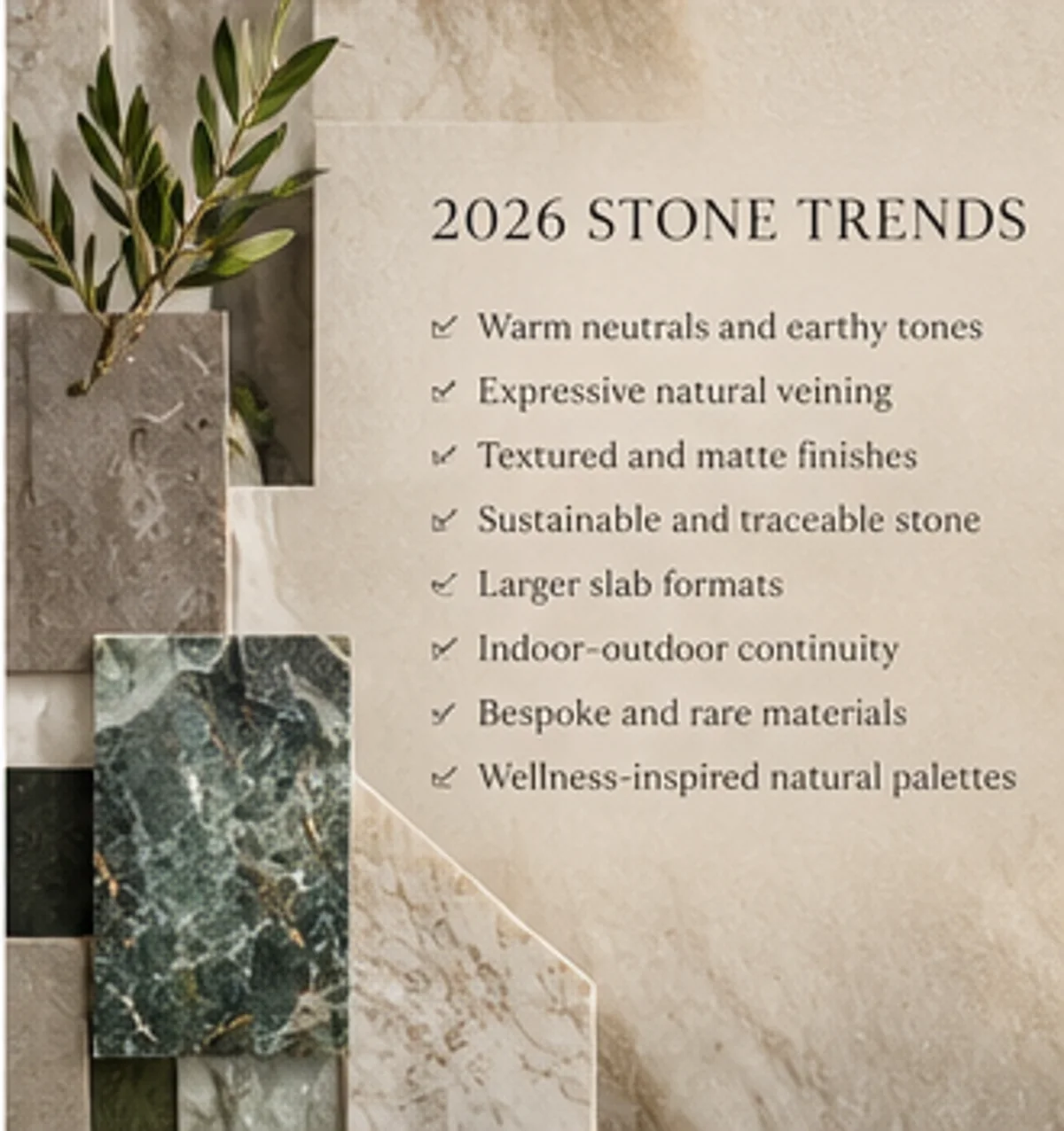
Current industry trend coverage highlights warmer colours, tactile finishes, expressive natural patterns, larger-format surfaces and a stronger emphasis on individual material character. For a Dubai-specific view, read Marble Trends in Dubai for 2026.
For architects and developers, these trends are useful starting points, but long-term suitability should take priority over short-lived fashion.
Warm neutrals and earthy colours
Cream, sand, beige, warm grey and muted brown tones offer an alternative to interiors dominated by cool whites and greys.
Travertine and selected limestones are particularly relevant where the aim is to create a calm, natural material palette.
Expressive veining and bookmatched features
Rather than using dramatic stone everywhere, designers can concentrate it in a few carefully selected areas, such as a reception wall, fireplace or kitchen island.
This allows the natural pattern to become a focal point without overwhelming the architecture.
Tactile, lower-sheen finishes
Honed, brushed and other textured finishes help create depth through surface rather than reflection alone.
They can work particularly well alongside timber, bronze, natural textiles and textured plaster.
Sculptural stone applications
Stone is increasingly treated as a three-dimensional architectural material, not simply a flat covering. Bespoke basins, curved forms, monolithic islands and sculptural furniture can make natural stone central to the design.
These applications require early coordination between the designer, fabricator and installer.
Large-format surfaces and material continuity
Large slabs can reduce visible joints and help maintain the visual flow of a material across a wall or floor.
The slab dimensions, handling requirements, fabrication tolerances and site access must be checked before specifying large formats.
More thoughtful sourcing and longevity
Architects and clients are increasingly interested in provenance, material durability and the long-term implications of their specifications.
Where environmental performance or responsible sourcing is a project requirement, ask for relevant documentation and assess the material’s full supply and installation context rather than relying on broad sustainability claims.
The most enduring trend is not a particular colour or stone name. It is selecting authentic materials that are appropriate to the building and capable of ageing well.
10. What Should Architects Ask a Natural Stone Supplier Before Ordering?
Before approving a material, architects, designers and developers should establish a clear understanding of the supply, quality, technical and commercial requirements.
Useful questions include:
- Which quarry or source does the material come from, and what provenance information is available?
- Can we inspect the actual slabs before approval?
- How much natural variation should we expect between slabs?
- Are the required quantities currently available?
- Can additional material be sourced later if the project expands or repairs are required?
- Are matching or bookmatched slabs available?
- What slab dimensions and thicknesses are available?
- Which finishes are suitable for the intended application?
- What technical information is available regarding water absorption, strength, abrasion and other relevant properties?
- Is the stone suitable for the proposed interior or exterior environment?
- What sealing, cleaning and maintenance requirements should be expected?
- Can the supplier support fabrication, cutting schedules and installation coordination?
- What is the expected lead time, including processing, packing, transport and delivery?
- How will the material be inspected and approved before shipment?
- What happens if a slab arrives damaged or differs materially from the approved selection?
These questions help establish realistic expectations before the order is placed and reduce the risk of costly changes later.
11. Common Mistakes When Selecting Natural Stone
Even an exceptional material can disappoint when the selection and procurement process is rushed.
- Choosing by name alone. A prestigious marble name does not guarantee the desired background colour or vein pattern. Review the actual slabs.
- Approving only a small sample. Small samples cannot show the full variation of a slab or the overall composition of a large installation.
- Selecting for appearance without considering use. A finish that looks beautiful in a showroom may not meet the requirements of a wet floor, busy kitchen or exposed façade.
- Ignoring the total project cost. The purchase price is only one part of the budget. Fabrication, wastage, transport, handling, installation and maintenance should also be considered.
- Ordering too late. Special selections, large quantities and bookmatched layouts can require additional sourcing and coordination time.
- Failing to coordinate the layout. Stone joints, vein direction, cut-outs and transitions should be considered alongside the architectural drawings before fabrication.
- Assuming every slab will match. Natural variation is an inherent characteristic of natural stone. The correct process is to establish an acceptable range of variation and approve the material accordingly.
A structured selection process helps preserve the design intent while improving procurement confidence.
Natural Stone Slab Approval Checklist
Use this practical checklist before confirming a stone order:
- Confirm the stone variety and source.
- Review photographs or inspect the actual slabs.
- Approve colour, veining and acceptable natural variation.
- Confirm dimensions, thickness and finish.
- Review the layout and bookmatching where applicable.
- Check technical suitability for the intended application.
- Confirm quantity, availability and additional material requirements.
- Agree delivery, fabrication and installation schedules.
12. How Tenetti Helps Clients Find the Right Stone
At Tenetti, our approach begins with understanding the project rather than recommending a material in isolation.
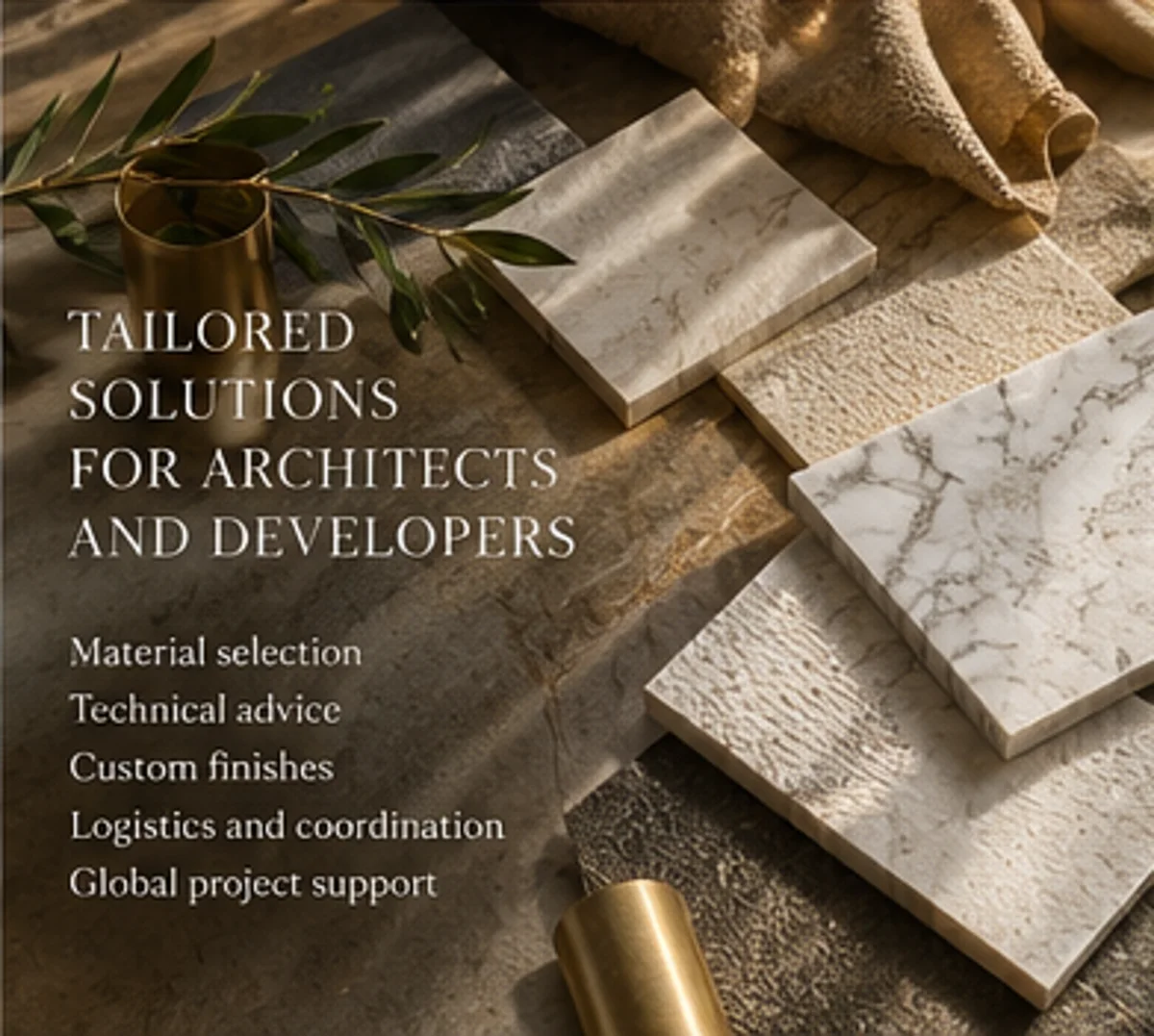
Drawing on 25 years of sourcing experience and established industry relationships, we work with clients to explore natural stone options that suit the architecture, intended application and overall design direction.
Our process can include:
- Understanding the brief: Establishing the project type, application, preferred colours, desired veining, finish and budget.
- Identifying suitable materials: Comparing marble, travertine, limestone and other relevant natural stones against the design and practical requirements.
- Reviewing slab selections: Assessing actual material where available, including colour, veining, variation, dimensions and suitability for the intended layout.
- Planning quantities and availability: Reviewing the required volumes, potential matching requirements and procurement schedule.
- Coordinating project requirements: Helping align material selection with fabrication, delivery and installation planning, with specialist technical input where required.
The level of support depends on the scope of the project, but the objective is consistent: to help clients make informed decisions before the material reaches the construction site.
For architects and developers working on luxury villas, palaces, hotels and large architectural projects, that understanding can make a meaningful difference to the selection process.
Comparing marble options and suppliers? Our buyer’s guide to luxury marble in Dubai covers the main marble types, what to check in a supplier and what to ask before you order.
Frequently Asked Questions About Choosing Natural Stone
Start by defining the intended application, architectural style, exposure conditions, maintenance expectations and budget. Compare suitable materials, review the actual slabs and confirm that the selected stone is appropriate for each use. Many villas benefit from combining different stones rather than using one material throughout.
Neither is universally better. Marble offers a wide range of expressive veining and colours, while travertine often provides warmer tones and a distinctive porous texture. The right choice depends on the design objective, intended use, finish and maintenance requirements.
Marble is a metamorphic rock, while limestone is a sedimentary rock. Their appearance and performance vary considerably by variety. Marble often features more pronounced veining, whereas limestone frequently offers a more understated, uniform character. Suitability must be assessed for the particular stone and application.
Natural stone varies between blocks and individual slabs. Reviewing the actual selection allows architects to assess colour, veining, natural features and the relationship between adjacent pieces. This is especially important for large surfaces and bookmatched installations.
Bookmatched marble uses adjacent slabs arranged so their natural veining mirrors across a joint. It is often used for feature walls, fireplaces, hotel receptions and other statement applications. The slabs should be selected and laid out together before fabrication.
There is no single best stone for every application. The appropriate choice depends on the material’s properties, the exposure conditions, the finish and the installation system. Exterior façades, terraces and pool surrounds require particular attention to weathering, moisture, thermal movement and slip resistance.
Some limestone varieties are suitable for exterior façades, but performance depends on the stone’s properties, exposure, thickness, fixing system and detailing. The selected material should be supported by appropriate technical information and reviewed by the relevant project professionals.
The finish must be appropriate for wet conditions and the intended barefoot use. Slip resistance, surface temperature, drainage, comfort and maintenance should all be evaluated. A textured finish may be appropriate, but the exact stone and finish should be assessed rather than selected by appearance alone.
Quantities depend on the measured area, slab dimensions, cutting plan, pattern matching, fabrication requirements and expected wastage. Bookmatched layouts and complex detailing can require additional material. Final quantities should be calculated from coordinated drawings and an agreed fabrication plan.
Establish the desired appearance and acceptable variation early, inspect and approve the relevant slabs, document the selection and coordinate the layout before fabrication. For large orders, confirm quantities and availability before committing to the specification.
Lead times vary by stone type, current availability, order volume, finishing, fabrication, transport and installation requirements. Imported or specially selected material may require additional time. Request a project-specific schedule before finalising procurement.
An experienced supplier can help identify suitable materials, explain natural variation, assess alternatives, coordinate slab selection and clarify procurement requirements. The value lies in making better-informed decisions and reducing avoidable uncertainty throughout the project.
Provide the project location, intended application, preferred stone or reference images, estimated area or quantity, required finish and thickness, project drawings where available, delivery requirements and target schedule. The more clearly the brief is defined, the more useful the proposed selection and quotation can be.
Choosing Stone That Belongs to the Architecture
The most successful natural stone projects begin with a clear understanding of what the building requires.
Sometimes that means selecting a dramatic marble with expressive veining. In other cases, it means choosing a quiet limestone or warm travertine that supports the architecture without competing with it.
The quality of the decision depends on understanding the material, reviewing the actual slabs, assessing the intended application and coordinating the selection with the wider project.
At Tenetti, we believe the best stone is not necessarily the most expensive stone. It is the stone that is right for the architecture, the light and the way the space will be used.
With 25 years of sourcing experience and established relationships within the natural stone industry, we help architects, designers, developers and private clients explore the right materials for considered residential and architectural projects.
Planning a luxury villa, hotel or architectural project?
Contact Tenetti to discuss your project requirements and explore natural stone options suited to your design, application and procurement schedule. Email us at contact@tenetti.com or visit tenetti.com.