At Tenetti, we believe the best stone is not necessarily the most expensive. It is the stone that is right for the architecture, the light and the way the space will be used.
Natural stone has a unique ability to shape the character of a building. It can bring warmth to a contemporary villa, create a sense of permanence in a hotel, or become the defining feature of a carefully considered interior. Yet with thousands of materials, finishes, colours and origins to explore, selecting the right stone can be one of the most demanding parts of an architectural project.
For architects and interior designers, the challenge is not simply finding a beautiful material. It is finding the material that brings the design vision to life while meeting the project’s practical requirements, availability and budget.
At Tenetti, we guide architects through this process, connecting their creative vision with a broad European natural stone sourcing network and bringing carefully selected materials to projects across Dubai and the UAE.
Our approach is straightforward: understand the project first, explore the possibilities, and find the stone that belongs there.
1. Start With the Architecture, Not the Price
When specifying natural stone, it is easy to be drawn towards the most prestigious marble or the rarest material in a collection. Certain stones have earned their reputation through their distinctive veining, exceptional appearance or limited availability. They can be extraordinary choices for the right project.
But a higher price does not automatically mean a better result.
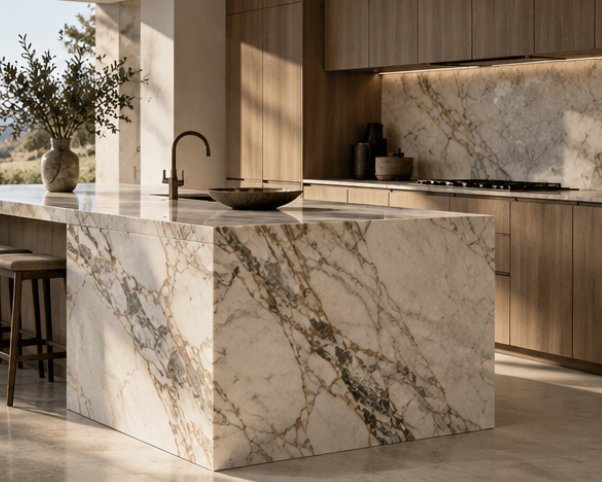
A dramatic Italian marble may be perfect for a sculptural kitchen island or a hotel reception desk, where the stone is intended to become the centrepiece. The same material might feel unnecessarily dominant in a quiet residential interior where the architect is seeking continuity, softness and natural light.
In another project, a refined limestone or warm travertine may achieve precisely the intended architectural expression, while offering a more suitable overall material cost.
This is why we begin by understanding the design.
What atmosphere is the architect trying to create? Should the stone stand out or complement the surrounding materials? Is the intention to create a strong visual statement or a calm, understated environment?
These questions help narrow the selection to materials that genuinely serve the architecture, rather than simply selecting the most expensive option available.
2. Understanding the Project Before Selecting the Stone
Every architectural project has its own requirements. A private villa, a boutique hotel and a large residential development may all call for natural stone, but the selection process will be different for each.
At Tenetti, we help architects consider several factors before making a recommendation.
Design Direction and Colour Palette
The stone should work naturally alongside the project’s lighting, cabinetry, timber, metal finishes and surrounding surfaces. A cool grey marble may complement a contemporary interior, while a warmer limestone or travertine can introduce a softer, more Mediterranean character.
Application and Performance
A stone selected for an interior feature wall may have different requirements from one intended for a bathroom floor, exterior façade or pool surround. Porosity, finish, expected traffic, exposure and maintenance all influence suitability. Technical requirements should be assessed for the specific application before the material is specified, and industry bodies such as the Natural Stone Institute publish useful guidance on matching stone to its intended use.
Scale and Visual Movement
Veining that looks beautiful on a single sample may appear very different across a large floor or full-height wall. Slab dimensions, pattern continuity and the relationship between individual pieces become especially important when the stone is used across expansive surfaces.
Quantity, Availability and Budget
A material may be visually perfect but difficult to source in the quantity required. For larger projects, the availability of compatible slabs, the potential for future matching and the production schedule all need consideration.
By addressing these factors early, architects can make informed decisions and avoid committing to a material before understanding whether it is suitable for the complete project.
3. Opening Up the Possibilities Through European Stone Sourcing
One of the most important parts of our work is helping architects discover materials beyond the limited selection they may initially have in mind.
Europe offers an extraordinary variety of natural stone, from classic Italian marbles to Portuguese limestone, Spanish materials and distinctive stones from other established quarrying regions.
Each has its own character, geological history and architectural potential. Even within a single stone category, differences in colour, veining, texture and finish can create entirely different results.
Through Tenetti’s sourcing network, production facilities and showrooms across Portugal and Spain, supported by our wider European presence, we connect architects and developers in the UAE with a broad range of European natural stone.
Our aim is to make this sourcing process more accessible and considered for projects in Dubai and across the UAE.
Rather than limiting a specification to the first material presented, we can explore alternatives that meet the same design intention. If an architect is looking for a warm, understated surface, for example, we can compare suitable limestone and travertine options. If a project calls for a distinctive marble, we can investigate different varieties, slab selections and finishes.
Sometimes the right solution is the stone originally specified. In other cases, an alternative delivers a more balanced combination of appearance, performance, availability and cost.
The value lies in having the choice and the expertise to make that comparison properly.
4. Looking Beyond the Name: Why the Individual Stone Matters
Natural stone is not a manufactured surface with a perfectly repeatable pattern. Its individuality is part of its appeal.
Two slabs from the same stone family can differ considerably in background colour, veining, movement and natural variation. The name of a material provides a starting point, but it cannot communicate everything about the actual slab.
This becomes particularly important in luxury residential and hospitality projects, where the stone may cover a substantial area or become a defining architectural feature.
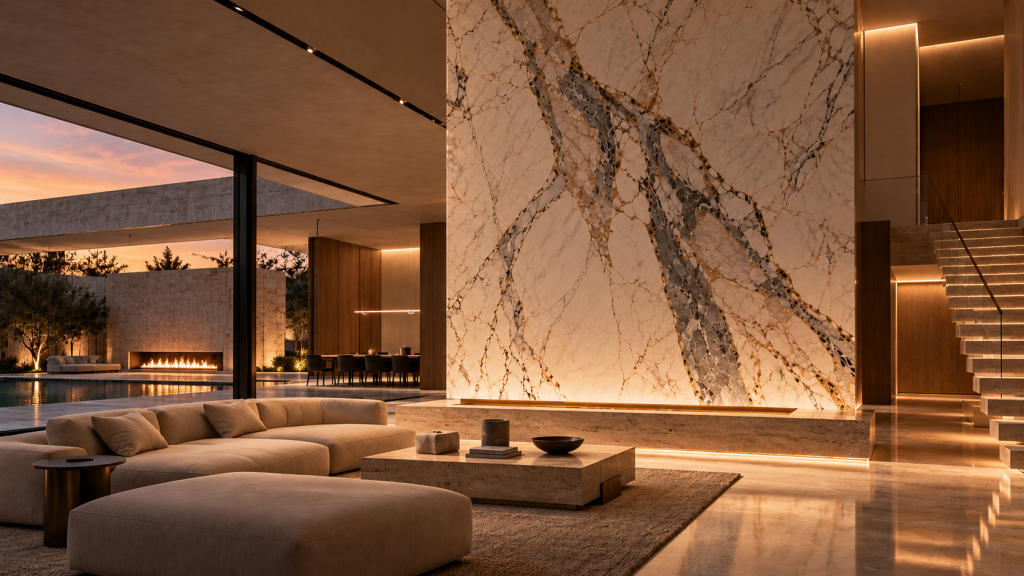
For a bookmatched marble wall, the direction and relationship of the veining can determine the entire composition. For a large limestone floor, consistency of tone may be more important than dramatic variation. For a statement kitchen island, a distinctive individual slab may be precisely what the design requires.
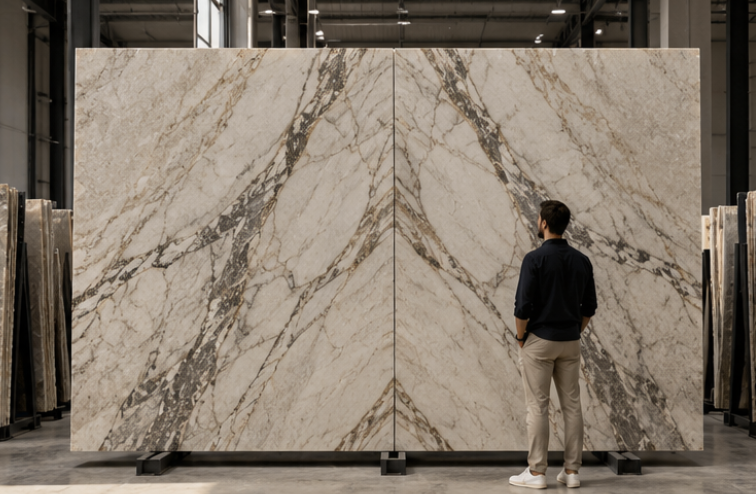
We help architects look beyond the material name and consider the stone itself.
Where the project calls for it, this means reviewing available slabs, assessing the visual character of the material, considering how individual pieces will work together and confirming whether sufficient quantities are available.
It is a more considered approach to specification: one that recognises the difference between selecting a category of stone and selecting the right stone for a particular space. Our article on how architects choose marble for high-end projects looks at slab selection in more detail.
5. Balancing Aesthetics, Performance and Budget
A successful stone specification brings several priorities together. The material must support the architectural vision, perform appropriately in its intended application and remain commercially realistic for the project.
These considerations should not be treated as competing objectives. With the right sourcing approach, they can inform one another.
Consider a villa where the architect wants a warm, natural appearance across the entrance, living areas and terraces. Rather than specifying a premium marble throughout, the project might benefit from a combination of carefully selected limestone for the main surfaces, travertine for outdoor areas and a more distinctive marble reserved for a feature wall or bathroom.
The result can feel more cohesive because each material has a clear purpose.
Likewise, a developer working on multiple residences may prioritise consistency, repeatability and reliable availability. In that situation, a stone that offers the right aesthetic with dependable supply can be a better choice than a rare material that complicates procurement or future replacement.
Our role is to help architects evaluate these options without losing sight of the original design intent.
We do not believe every project needs the most expensive stone. We believe every project deserves the right one.
6. Choosing Finishes and Understanding Their Impact
The finish can transform the appearance and practical qualities of a natural stone.
A polished marble reflects light and can emphasise colour and veining. A honed finish creates a softer, more understated surface. Brushed and tumbled finishes introduce texture and a less formal character, while other surface treatments can be selected to meet specific aesthetic or technical requirements.
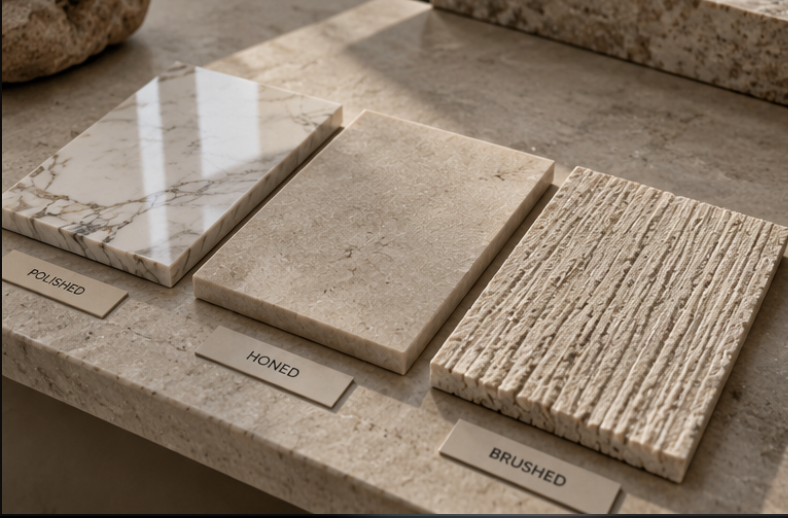
The choice affects more than appearance.
Depending on the stone and application, the finish can influence maintenance, slip resistance, surface wear and how the material responds to its surroundings. Exterior areas, wet spaces and high-traffic environments require particular attention to the relevant performance criteria.
In the UAE, these considerations are especially important when selecting stone for exposed terraces, pool surrounds, façades and other outdoor applications, where architectural stone solutions may also be worth considering.
Rather than assuming that a particular finish is suitable simply because it looks right, we encourage architects to consider the intended use and the stone’s technical characteristics together.
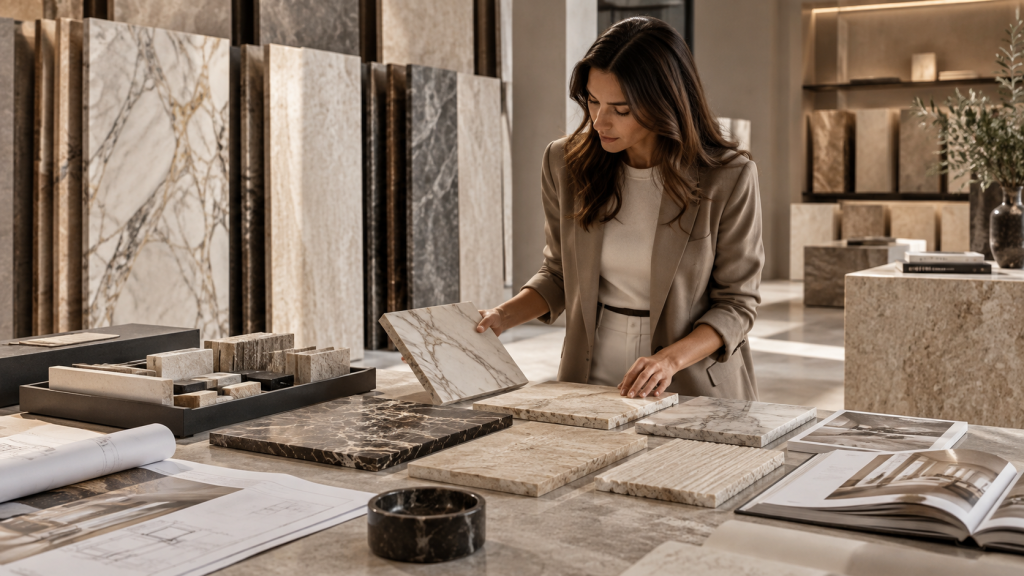
Samples and, where appropriate, larger material selections allow the architect to evaluate colour, texture and finish alongside the project’s other finishes before finalising the specification.
7. From the First Conversation to the Final Specification
Selecting natural stone should be a collaborative process. The earlier material considerations are addressed, the easier it becomes to coordinate design, procurement and execution.
At Tenetti, our approach is built around guiding the architect through the key stages of selection.
Step 1: Understand the brief. We begin with the project’s architectural direction, intended applications, preferred colours, quantities, budget and programme.
Step 2: Explore suitable materials. Using our European sourcing network, we identify potential stones that align with the design intent and practical requirements.
Step 3: Compare and refine. We help narrow the selection by considering appearance, finishes, slab availability, technical suitability and cost. Where appropriate, we present alternatives that may achieve the same design objective.
Step 4: Review samples and slabs. The architect can assess the material’s real character and, where the project requires it, review specific slab selections and pattern continuity.
Step 5: Coordinate the requirements. Before the specification is finalised, quantities, dimensions, finishes, fabrication requirements, availability and delivery expectations need to be confirmed in line with the project’s scope.
This process helps turn a broad design ambition into a more informed material decision, giving the architect greater clarity before the stone is ordered.
8. A European Sourcing Network, Supporting Projects Across the UAE
For architects working in Dubai, access to a broad selection of European stone can make a meaningful difference to the design process.
At Tenetti, our European production, warehousing and showroom network connects material sourcing with the requirements of projects in the UAE. Our presence across Portugal and Spain, alongside our wider European operations and Dubai team, helps bridge the distance between the origin of a material and the project where it will ultimately be used. You can read more about Tenetti and how we work.
We work with marble, travertine, limestone, onyx and other natural stone options, helping architects explore materials suited to a wide range of residential, hospitality and commercial applications.
The objective is not simply to offer more choices. It is to make those choices useful.
A wider sourcing network matters when a project requires a particular tone, a specific finish, larger quantities or an alternative to the material originally considered. It also allows the conversation to move beyond a fixed catalogue towards a more tailored approach to material selection.
For us, the most valuable outcome is when an architect discovers a stone that fits the project better than the one they initially had in mind.
The Right Stone Is the One That Belongs in the Project
Natural stone is an investment in the character of a building. Its beauty lies not only in its rarity or price, but in the way it responds to light, complements other materials and becomes part of the architecture.
Sometimes the right choice is a celebrated Italian marble. Sometimes it is a quietly beautiful limestone, a warm travertine or a distinctive stone discovered through a wider sourcing search.
What matters is that the decision is deliberate.
At Tenetti, we believe the architect’s vision should guide the selection, not a price tag, a trend or a material’s reputation alone. Our role is to help explore the possibilities, understand the requirements and source the stone that brings the project together.
Because the best stone is not necessarily the most expensive.
It is the stone that is right for the architecture, the light and the way the space will be used.
Planning a Project?
Whether you are specifying stone for a private villa, a hospitality project or a larger residential development, Tenetti can help you explore suitable materials from our European sourcing network.
Share your drawings, material preferences or project brief with our team. We will work with you to identify the natural stone options that best suit your design, requirements and budget.
Contact Tenetti to discuss your project or request material samples.
Frequently Asked Questions
Architects consider the design concept, colour palette, intended application, finish, technical performance, slab dimensions, availability, maintenance and budget. The best choice balances these factors while supporting the overall architectural vision.
No. Price can reflect rarity, demand, origin, selection and processing, but it does not automatically determine whether a stone is suitable for a particular project. A carefully selected limestone or travertine may achieve the desired result more effectively than a more expensive marble.
Yes. Tenetti helps architects explore alternative materials that align with the original design intent. Depending on the brief, alternatives can be assessed by colour, veining, finish, technical suitability, availability, quantity and cost.
Tenetti draws on a European sourcing network, with production, warehousing and showroom facilities across Portugal and Spain, alongside wider European operations. The network provides access to a broad selection of natural stone for projects in Dubai, the UAE and Europe.
Marble, limestone and travertine are all used in luxury villas, depending on the application and design. The appropriate selection depends on factors such as exposure, moisture, traffic, finish, maintenance and the technical requirements of the intended use. Exterior and wet-area applications should be assessed individually.
Yes. Reviewing samples helps architects assess colour, texture and finish alongside other project materials. For larger or visually sensitive installations, reviewing the actual slabs may also be important.
Tenetti works with architects, interior designers, developers and contractors on projects ranging from private residences to hospitality and larger developments. Material selection, quantity planning, sourcing and fabrication requirements can be discussed according to the project scope.