Luxury Marble in Dubai: A Buyer’s Guide
Dubai defines modern luxury, and the top marble suppliers in Dubai must match this standard. Marble remains one of the most desired choices for villas, hotels, and commercial projects.
Buyers today demand more than beauty from marble suppliers in Dubai. They want durability, exclusivity, and long-term value. This guide explains how to select the right marble for high-end developments in the UAE.
Why Marble Dominates Luxury Projects
Marble offers a unique combination of elegance and performance. Its natural patterns create a timeless look that artificial materials cannot match.
Natural Beauty and Exclusivity
Each marble slab is unique. No two pieces share the same veining. This exclusivity makes it ideal for luxury interiors.
High-end buyers often prefer rare stones. These materials elevate the identity of a project.
Long-Term Investment Value
Marble ages well when maintained properly. It can last decades without losing appeal.
This makes it a strong investment for:
- Luxury villas
- Hotel lobbies
- Commercial spaces
- Signature architectural features
Popular Marble Types in the UAE Market
Dubai’s market offers a wide range of premium marble from trusted marble suppliers in Dubai. Selection depends on design goals and project scale. Buyers can consult resources like the Natural Stone Institute for material standards and care guidance.
Italian Marble
Italian marble remains a top choice. It is known for refined veining and soft tones.
Common applications include:
- Flooring in luxury villas
- Bathroom surfaces
- Feature walls
Greek and Turkish Marble
These stones offer strong durability and clean aesthetics. They are ideal for large-scale projects.
They are often used in:
- Hotels
- Commercial buildings
- Outdoor cladding
Exotic and Rare Stones
Rare marble varieties create statement spaces. These include bold patterns and rich colors.
They are best suited for:
- Reception areas
- High-end retail
- Custom interiors
Looking for an alternative with similar drama but greater everyday durability? Our luxury quartzite buyer’s guide compares quartzite to marble for Dubai villas and high-traffic interiors.
Key Factors When Choosing Marble Suppliers in Dubai
Selecting marble requires more than visual preference. Several technical factors must be considered.
Durability and Application
Different marble types perform differently. Some are better for walls, while others suit flooring.
Always match the stone to its purpose:
- High traffic areas need stronger marble
- Bathrooms require moisture-resistant options
Finishing Options
Marble finishes affect both appearance and function.
Common finishes include:
- Polished for a glossy look
- Honed for a matte finish
- Brushed for texture
Each finish changes how light interacts with the surface.
Sourcing Quality Marble Suppliers in Dubai
Reliable sourcing is critical. Poor-quality marble can lead to long-term issues.
Working with direct importers ensures:
- Better pricing
- Consistent quality
- Access to exclusive materials
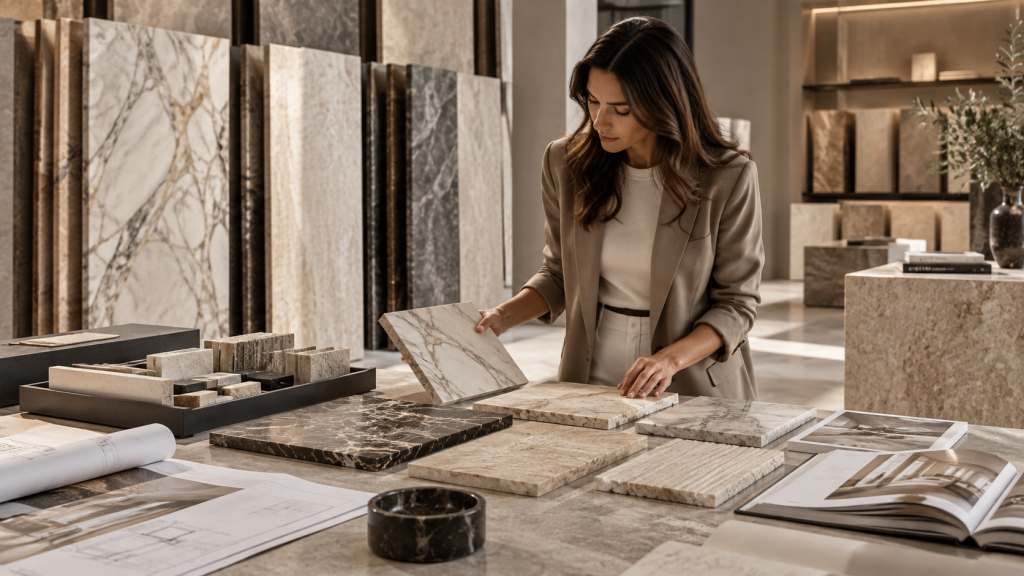
For a closer look at how architects and designers approach this decision — slab selection, large-format applications and what to ask a supplier — see our guide to choosing a luxury marble supplier in Dubai.
Trends in Luxury Marble Design
Design trends in Dubai continue to evolve. However, marble remains central to luxury architecture.
Large Format Slabs
Large slabs create seamless surfaces. They reduce visible joints and enhance visual flow.
This trend is popular in:
- Hotel lobbies
- Open-plan villas
Bookmatched Marble
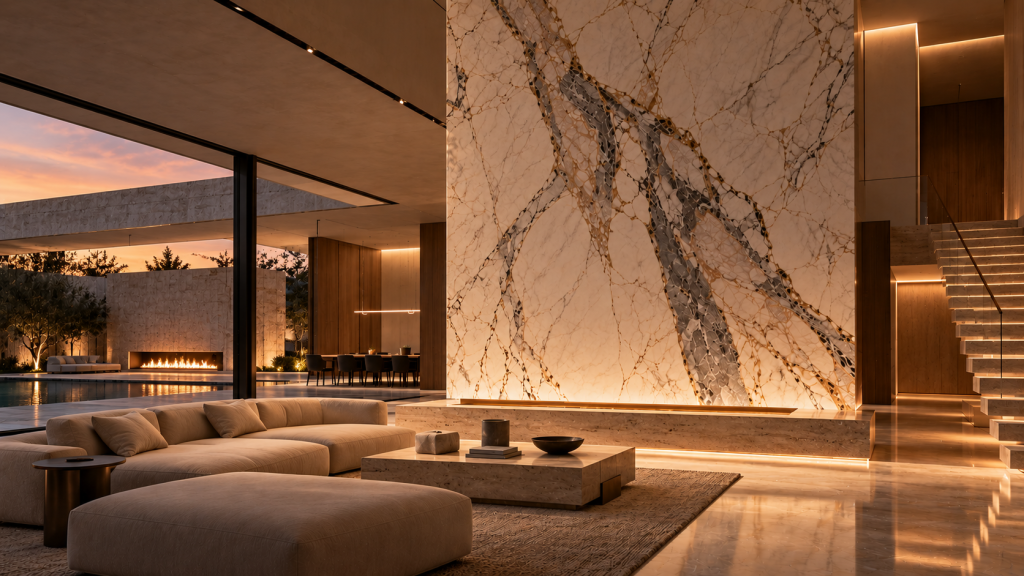
Bookmatching creates mirrored patterns. This technique highlights the natural beauty of stone.
It is commonly used for feature walls.
Neutral and Earthy Tones
Soft colors dominate modern interiors. Beige, white, and grey tones are in high demand.
These shades create calm and elegant environments.
Why Direct Import Matters
Developers and designers benefit from working with importers. It provides greater control over material selection.
Key advantages include:
- Access to global quarries
- Competitive pricing
- Custom project solutions
- Faster delivery timelines
This approach is essential for large-scale developments in the UAE.
Conclusion
Marble continues to define luxury construction in Dubai. Its timeless appeal and versatility make it unmatched.
Choosing the right marble requires careful planning. Quality, sourcing, and application all play a role.
For villas, hotels, and commercial projects, the right stone elevates the entire space. Working with experienced importers ensures the best results.
Summary
Marble remains a top choice for luxury projects in Dubai. It offers beauty, durability, and long-term value. Buyers should focus on quality, sourcing, and application. Direct importing provides better control and access to premium materials.
Frequently Asked Questions
Prices vary by type and finish. Statuario and Calacatta sit at the premium end due to their rarity and dramatic veining, while more widely available marbles like Carrara offer a lower-cost entry into natural stone. Slab size, thickness, and finish all affect the final price, so we recommend a consultation based on your project’s scope for an accurate quote.
Statuario and Calacatta are the most requested choices for luxury villas, prized for their bold white base and striking veining. For heat-heavy areas like poolside terraces, travertine and limestone are often preferred for their lower heat absorption and slip resistance.
Tenetti supplies Statuario and other premium marble types directly to villas, hotels, and commercial developments across Dubai and the wider UAE, from sourcing through to installation.
For architectural and developer-led projects, Calacatta, Statuario, and large-format marble slabs are the most specified today for their consistency across large surface areas and predictable lead times — key considerations for firms managing multi-unit developments.
Yes. Natural marble is durable, timeless, and consistently associated with premium property value in Dubai’s villa and hospitality markets, unlike trend-driven finishes that date quickly.