Marble vs Travertine: Choosing the Right Stone for UAE Luxury Projects
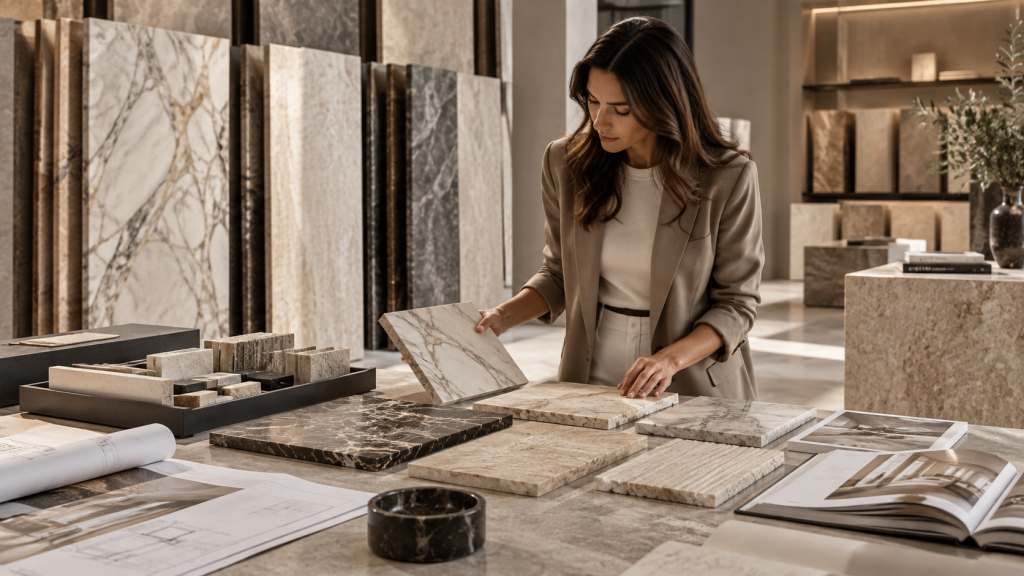
Natural stone defines luxury in architectural spaces, and the marble vs travertine question shapes many material decisions. In the UAE, designers and developers often choose between marble and travertine for upscale villas, five-star hotels, and commercial buildings. Each stone brings a unique look, feel, and performance that can transform interiors and exteriors. This article helps you decide which stone best matches your aesthetic and functional needs.
What is Travertine?
Travertine is a natural stone formed from mineral springs and water deposits. Its structure shows characteristic pores and soft, earthy movement that adds depth without overwhelming a space.
Travertine Key Features
- Warm, neutral tones such as beige, cream, and light gold that complement soft palettes.
- Textured surface that creates a grounded, organic feel.
- Highly porous structure, so sealing is essential.
Travertine’s texture and warmth make it ideal for spaces that embrace Mediterranean, organic modern, or earthy luxury. Its porous surface also helps hide minor marks and wear within high-traffic areas.
What is Marble?
Marble is a metamorphic stone formed under extreme heat and pressure. It is known for its smooth crystal structure and dramatic veining patterns, ranging from soft whites to deep dark tones.
Marble Key Features
- Elegant veining that adds visual drama and luxury.
- Smooth, polished surfaces for a refined, high-end look.
- Moderate porosity, requiring regular sealing to prevent stains and etching.
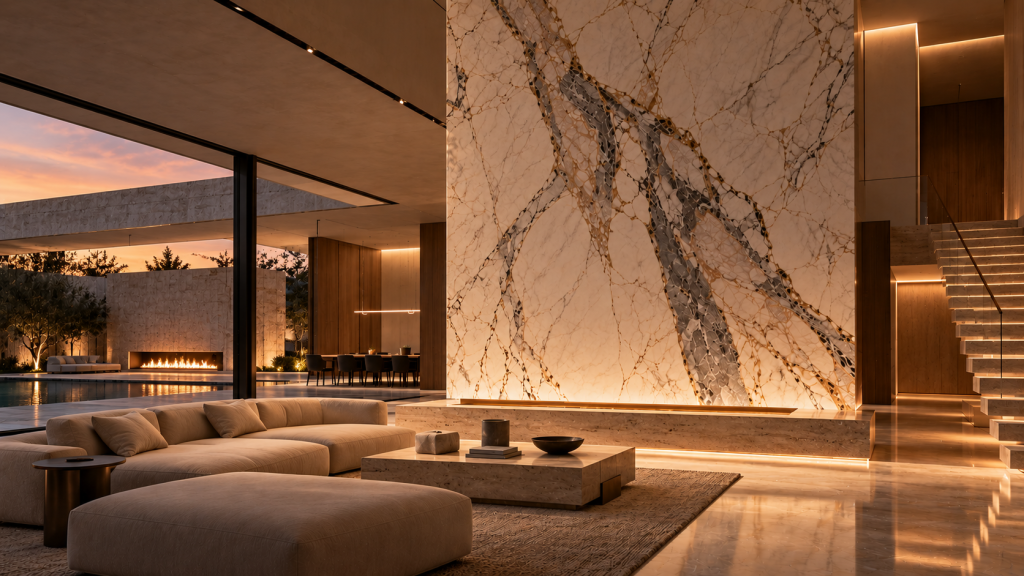
Marble’s polished appearance and distinctive patterns make it a favourite for grand foyers, luxury lobbies, bespoke furniture pieces, and high-end interiors.
Aesthetic Differences: Warm vs Refined
The most noticeable difference is how these stones make a space feel:
Travertine Aesthetic
- Earthy and calming
- Natural texture with subtle tonal shifts
- Ideal for neutral, organic luxury interiors
Marble Aesthetic
- Sleek and expressive
- Bold veining and contrast
- Suited for contemporary or classic elegant designs
Travertine excels where a grounded, warm ambience is desired, while marble is chosen for crisp sophistication and bold visual focus.
Marble vs Travertine: Durability and Maintenance
Both marble and travertine are durable natural stones, but they differ in wear and care needs. The Natural Stone Institute notes that both stones require routine sealing to protect against staining and etching:
- Porosity: Travertine is more porous than marble, making sealing essential to avoid staining.
- Wear Resistance: With proper sealing, both can handle high traffic, but travertine’s surface can hide small scratches due to its texture.
- Cleaning: Gentle, non-acidic cleaners are recommended for both stones to avoid damage.
Regular sealing and appropriate maintenance are key for preserving natural stone surfaces in luxury villas, guest spaces, lobbies, and bathrooms alike.
Marble vs Travertine: Cost Considerations for Large Projects
Cost is an important factor in construction budgets:
- Travertine tends to be more budget-friendly for large flooring areas and exterior applications.
- Marble often carries a higher price tag, especially rare and exotic varieties known for intense veining.
For hotels, commercial foyers, and large villa floors, travertine can offer a more economical solution without sacrificing natural stone luxury.
Best Applications in UAE Architecture
Travertine
- Outdoor patios and pool decks
- Flooring in warm, textured spaces
- Accent walls and textured cladding
Marble
- Grand entrance halls
- Feature walls and bespoke furniture
- Premium bathrooms and kitchen islands
Both stones complement the UAE’s high-end architectural landscape when chosen to match design intention and use requirements.
Conclusion
Choosing between marble and travertine depends on your design goals and project needs. Travertine offers a warm, textured, and cost-effective solution for expansive luxury spaces. Marble delivers elegance, dramatic veining, and refined surfaces that stand out in upscale interiors. Consider aesthetics, maintenance, and long-term performance when selecting stone for villas, hotels, or commercial buildings.
Summary
- Travertine creates a warm, textured aesthetic suitable for large luxury installations.
- Marble delivers polished elegance and bold visual impact.
- Both stones require sealing and gentle care.
- Travertine is often more economical for large areas.
- Marble is ideal for dramatic, high-end focal points.